
Solutions
Why Your Personal Loan Rate Sits at the Maximum: The Platform's Commission Model, Not Your Credit File
Why your personal loan rate sits at the 4% ceiling: the channel's flat commission, not your credit file. One soft enquiry surfaces sub-ceiling offers.
A personal loan ceiling quote from a licensed moneylender in Singapore traces to the commission structure of the referral channel, not to the borrower's credit file.
What a Ceiling Quote Actually Is
A 4% p.m. ceiling quote is the maximum legal interest rate for an unsecured personal loan from a licensed moneylender in Singapore, set by MinLaw under the Moneylenders Act Cap. 188 (effective 1 October 2015). The ceiling is a permitted-fees limit, not a price target. Yet it functions as the default price when a borrower enters the market through a channel that applies no competitive pressure to lenders.
The cost of a ceiling quote on a 12-month personal loan at 4% p.m. + 10% admin exceeds the cost of a sub-ceiling offer by up to ~23 percentage points p.a. (projected, illustrative).
Why the Borrower Profile Is Often Innocent
A personal loan ceiling quote traces to the commission structure of the referral channel, not to the borrower's credit file.
A flat-commission comparison platform earns the same fee whether the lender quotes 4% or 2.5%, identical to a flat-commission insurance agent who earns the same on the expensive policy as the lean one. The ceiling quote is the fee structure, not the borrower's file.
A ceiling quote reflects the channel's economics, not the borrower's risk: when the platform's fee does not fall as the rate falls, the platform has no fee reason to push the quote off the ceiling.
What Makes a Ceiling Quote the Default
A licensed moneylender prices a loan conservatively when it receives limited borrower profile information. A lender with full profile data, including income, CPF contribution history, and employment stability, has the underwriting basis to price below the ceiling. The referral platform controls the information sent to the lender, not the borrower.
The MinLaw permitted-fees schedule sets the ceiling at 4% p.m. interest and 10% admin fee on disbursement. That schedule defines the legal maximum; it does not compel lenders to quote below it. The lender's underwriting confidence determines the floor, and that confidence depends on the quality and completeness of the submitted borrower profile.
An offline application at a single walk-in licensed lender generates one quote from one lender, with no profile submitted in advance and no competing offer to benchmark against. Research from FundBright's early borrower interviews documents this pattern: the single-counter walk-in route returns a quote at or close to the 4% ceiling in most documented cases.
How Flat Commission Locks the Rate at the Cap
A comparison platform on flat commission earns the same referral fee from the lender whether the rate quoted is 4% or 2.5%. That fee structure removes the platform's incentive to push lenders toward competitive pricing. When preferred lending partners and sponsored placements determine which lender the borrower sees first, the loudest offer, not the lowest rate, wins.
A platform on inverse commission earns a lower fee when the lender quotes a lower rate. The inverse commission structure gives lenders a direct financial incentive to surface their most competitive offer, because the lender that quotes lower pays FundBright less commission, giving lenders a reason to compete on rate rather than default to the ceiling. This is the structural distinction between the two commercial models.
Does a high personal loan rate mean I have bad credit?
A ceiling quote from a licensed moneylender traces to two factors: the channel's commission model and the borrower's submitted profile. A flat-commission platform delivers a ceiling quote regardless of credit quality. A creditworthy borrower on a flat-commission channel receives the same ceiling quote as one with a patchy file.
How to Diagnose the Real Cause
The distinction between a borrower-side and a channel-side ceiling trigger has a practical test. Two questions separate them.
The Comparison Test
A borrower who receives two or more offers on the same profile, through the same channel, with all offers landing at 4% p.m., has evidence pointing to a borrower-side ceiling trigger: either the profile is incomplete or the borrower's file presents genuine risk factors that underwriting reflects.
A borrower who receives a 4% quote through one channel and a sub-ceiling offer through a different channel on the same submitted profile has clear evidence of a channel-side pricing problem. The borrower's profile has not changed; the commission structure of the channel has.
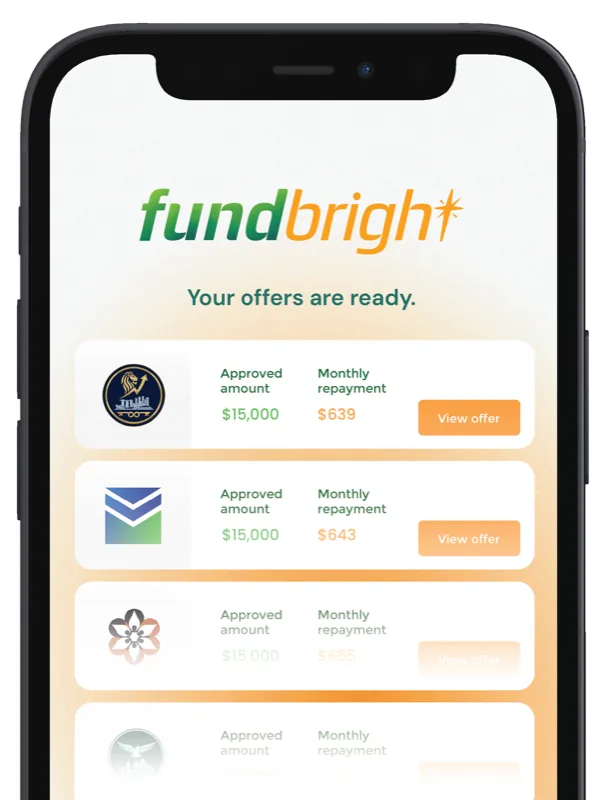
One soft enquiry on FundBright generates offers from multiple lenders on a single submitted profile. That single submission is the comparison test instrument: the spread of offers reveals what the profile actually commands in a rate-competitive environment.
The Commission Test
A comparison platform on flat commission publishes the same referral terms to all lenders regardless of the rate the lender quotes. Lenders quote conservatively, at or near the ceiling, largely because of their own limited visibility into a new borrower's risk. A flat-commission platform does nothing to change that: it carries no penalty for a lender who prices at the ceiling, so it gives lenders no extra reason to price below it either.
A platform on inverse commission publishes a lower referral fee schedule when the lender's offered rate falls below the ceiling. That lower fee is the mechanism: the lender accepts a smaller spread because it pays less to the platform when it competes on price.
The borrower identifies the channel's commission model by asking the platform directly how it structures lender fees. If a platform charges lenders a flat fee or charges per lead, there is no financial reason for it to prefer a lower rate for the borrower.
How do I tell if my rate is high because of me or because of the channel?
Two tests separate the borrower's file from the channel's economics. Comparison test: compare the same profile through a different channel. A sub-ceiling offer confirms a channel-side cause. Commission test: ask how the platform charges lenders. Flat commission earns the same at 4% as at 2.5%; inverse commission earns less when the rate falls.
Three Levers That Move a Ceiling Quote
The ceiling quote is not a fixed outcome. Three levers move it, each controlled by a different party.
| Lever | Who Controls It | Effect on the Quote | Under Flat Commission | Under FundBright's Inverse Commission |
|---|---|---|---|---|
| Commission structure | The comparison platform's fee model | Sets whether the lender has any incentive to quote below the ceiling | Lender pays the same fee regardless of the rate quoted, so there is no incentive to compete | Lender pays a lower fee when it quotes a lower rate, creating a direct pricing incentive |
| Profile completeness | The platform's data-collection process | Gives the lender the underwriting basis to price below the ceiling | Limited borrower data reaches the lender, so it prices conservatively | A complete borrower profile (income, CPF contribution history, employment stability) supports a below-ceiling quote |
| Lender count | The platform's network size | Determines whether the borrower sees one quote or several competing quotes | A single walk-in application produces one quote with no competing offer | The profile reaches multiple signed lenders in one submission, producing a spread of offers to compare |
Why the Commission Structure Is the Load-Bearing Lever
Commission structure is one of the biggest levers behind the rate the borrower is quoted; it is not the only one. A borrower who submits a complete profile to a flat-commission platform still receives the ceiling quote if the platform passes no competitive pressure to the lender. The other levers, profile completeness and lender count, operate on the lender's information set. The commission lever operates on the platform's fee structure. That is why it is load-bearing: it changes the system's default before the borrower submits anything.
Inverse commission works before the borrower ever sees a quote; it changes what the lender is incentivised to offer in the first place.
What Closing the Loop Does
FundBright captures the final disbursed loan terms from both the lender and the borrower after the in-person handover. The MinLaw Registrar's Directions mandate that in-person handover: a licensed moneylender must verify the borrower's identity by meeting the borrower in person at the licensed moneylender's approved place of business before granting any loan. A loan transaction performed fully online, and at locations other than the approved places of business, is disallowed.
The closed-loop capture is the enforcement mechanism for the inverse commission model. Without that reconciliation, a lender could quote sub-ceiling at the offer stage and revert to ceiling terms at signing. The closed-loop capture prevents this because FundBright records both the lender's declared offer and the borrower's confirmed disbursement terms, and reconciles them.
Compare to See What Your Profile Actually Commands
A soft enquiry on FundBright submits the borrower's profile to the licensed moneylender network and returns offers in one session, without a credit bureau pull at the comparison stage. The spread of offers is the comparison test: it shows what the profile commands in a rate-competitive environment, rather than what a single channel's default ceiling delivers.
Best offer wins. No priority, no favourites. You stay in control.
Ready to find your best rate?
Compare Personal Loan RatesThese might also help
Ready when you are.Ready when you are.
checking will not affect your credit score