
Solutions
A Personal Loan Covers the Medical Gap Before It Becomes Default
Personal loan for medical emergency in Singapore: bridge the MediShield deductible, not a card cash advance at 8%. One soft enquiry, same-day offers.
A personal loan for a medical emergency in Singapore bridges the deductible and co-insurance gap that MediShield does not cover: the amount owed directly to the hospital, before a delayed payment turns an unpaid balance into a mark on your credit file. For patients aged 80 and below, that gap ranges from S$2,000 to S$3,500 depending on ward class, a figure fixed by Ministry of Health rules. The speed at which you fund it determines whether the bill stays clean or ages into default.
Why Hospital Bills Outrun Insurance
The MediShield Life deductible and co-insurance portion of any Singapore hospital bill must be settled in cash or MediSave before MediShield Life pays its share. For patients aged 80 and below, a gap of S$2,000 to S$3,500 remains for the patient to cover.
MediShield Life works in three sequential layers. First, the patient pays the deductible, a fixed amount set by the Ministry of Health that MediShield never covers. Second, the patient pays the co-insurance: 10% of the first S$5,000 claimable, falling to 5% and then 3% on larger claims. Third, MediShield pays the remainder of the approved claim to the hospital directly. The patient covers layers one and two, in cash or MediSave. For Class A wards and private hospital stays, the deductible is higher, up to S$3,500 for patients aged 80 and below, before MediShield Life applies.
The hospital submits the MediShield Life claim; CPF Board processes and pays the insurer's share. The deductible and co-insurance are a separate obligation: the patient owes that amount to the hospital, not the insurer. For public hospitals in Singapore, the payment period on the outstanding balance is typically 30 days from billing. That is the urgency. The clock runs from the billing date, not from when the insurer settles.
Hospital Bill Cost Components: What MediShield Covers and What the Patient Owes
| Cost Component | Who Pays | Typical Amount | Paid Via |
|---|---|---|---|
| Deductible | Patient | S$2,000 to S$3,500 (higher for Class A / private wards, patients aged 80 and below) | Cash or MediSave |
| Co-insurance | Patient | 10% of the first S$5,000 claimable, falling to 5% then 3% on larger claims | Cash or MediSave |
| Remainder of approved claim | MediShield Life | Paid directly to the hospital | Insurance payout via CPF Board |
How long does insurance take to settle a hospital bill in Singapore?
MediShield Life claims are submitted by the hospital to CPF Board; the payout offsets the insurer's share of the bill during the billing cycle. The patient's deductible and co-insurance are owed to the hospital regardless of MediShield timing; CPF Board's settlement does not reduce the patient's deductible obligation. The urgency is the hospital's payment requirement on the patient's portion, which runs from the billing date independent of the MediShield claim timeline.
The Real Cost of a Credit Card Cash Advance
A credit card cash advance charges a 5 to 8 percent upfront fee with no interest-free period, and no health insurer, whether MediShield Life or any Integrated Shield Plan, reimburses that fee, leaving the borrower paying both the medical gap and the card's cost on top of it.
Miss the hospital's payment deadline, and the unpaid balance can turn into a default on your credit file. The credit card reaches for the cash but adds its own cost to the total bill. The cheaper route, when the deductible sits beyond what one statement cycle absorbs, is a fixed-instalment loan whose rate is set at inception and does not roll daily.
Common advice reaches for the credit card in a medical emergency, but a cash advance charges its 5 to 8 percent upfront fee and starts accruing interest from day one, with no grace period. For a deductible gap that takes more than a few days to repay, a fixed-instalment personal loan from a licensed moneylender — with a total cost fixed at the start — often costs less than a cash advance's combination of upfront fee and compounding daily interest.
The 5 to 8 Percent Fee No Insurer Reimburses
DBS and Standard Chartered generally charge 8% upfront on the cash advance amount. Across Singapore banks, the range is 5 to 8 percent, applied to the advance at the moment it is drawn. That fee is not waived if the balance is repaid quickly. No MediShield Life benefit, no Integrated Shield Plan, and no CHAS subsidy reimburses a credit card cash advance fee. The borrower pays the medical gap plus the fee, a combined starting position higher than the gap itself.
Rolling Interest With No Grace Period
Unlike purchases, cash advances carry no interest-free period. Interest accrues from the day of the advance at approximately 28 to 30% p.a. on the outstanding balance, rolling daily. A S$3,000 advance left unpaid for three months accumulates roughly S$200 in interest at 28 to 30% p.a., on top of the 8% upfront fee of S$240. Total cost of funding: S$440 for a S$3,000 hospital gap, before any principal repayment. A fixed-instalment loan's total cost is known at inception and does not compound during the repayment window.
The Default-on-File Risk When the Balance Stays
When a hospital deductible balance is funded by a revolving card and not cleared by the next statement, the balance rolls with interest. If monthly minimum payments are missed, the delinquency records on the CBS credit file. CBS has a score; clustered delinquency events lower it. A lower CBS score pushes future bank loan quotes higher and can disqualify a borrower from bank products entirely. Funding a medical emergency with a card that stays unpaid trades a short-term cash gap for a longer-term credit file impact.
Is a credit card cash advance ever cheaper than a personal loan for a hospital bill?
A cash advance costs less only when the full balance is repaid within the current statement cycle, but cash advances carry no interest-free period, so interest runs from the moment of the advance regardless of when the next statement closes. For a deductible gap that takes one to three months to repay, a fixed-instalment personal loan from a licensed moneylender at a confirmed EIR below the card's rolling charge produces a lower total cost. The 5 to 8 percent upfront fee makes the card more expensive from day one for any gap that does not clear immediately.
When a Personal Loan Beats a Card
A personal loan from a licensed moneylender beats a card cash advance when the deductible gap exceeds the amount settleable within the card's current statement cycle, because the loan's EIR is fixed at inception while the card's charge rolls daily from the moment of the advance.
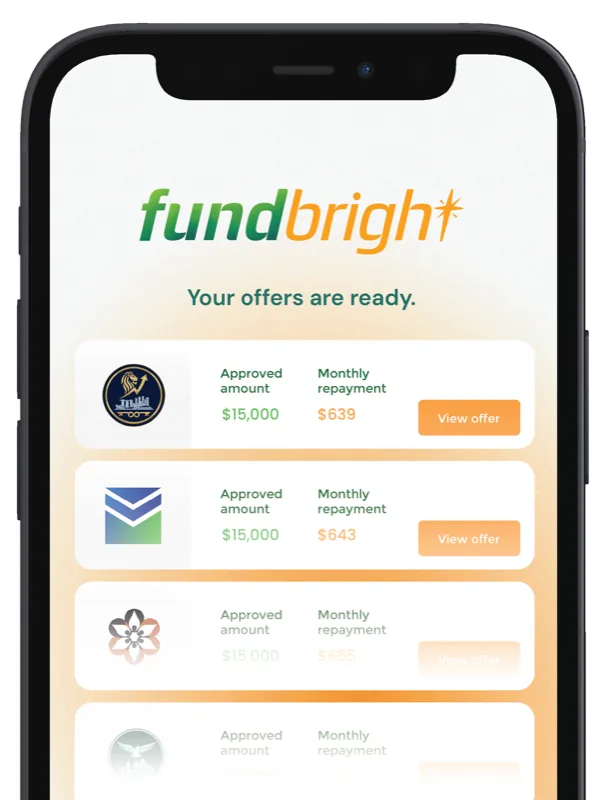
FundBright is a comparison platform, not a moneylender. It forwards the borrower's profile to the licensed moneylenders in its network; the lenders make offers on that profile with no credit pull at the comparison stage. FundBright operates on an inverse commission model: lenders pay a lower commission when they offer the borrower a lower rate. The single mandatory MLCB report required under section 30N of the Moneylenders Act is pulled once, by the lender the borrower selects, in person at the lender's approved place of business. A licensed moneylender must verify the borrower's identity by meeting the borrower in person at the licensed moneylender's approved place of business before granting any loan.
Will applying or comparing on FundBright affect my credit profile?
No. FundBright runs one soft enquiry at the comparison stage. A soft enquiry does not affect your credit profile. A hard pull happens only when you provide consent, during your in-person appointment at the lender's approved place of business.
Loan Option Comparison: Medical Deductible Gap Funding
| Funding Option | Upfront Fee | Interest | Interest-Free Period | Best For |
|---|---|---|---|---|
| Credit card cash advance | 5-8% upfront (DBS / Standard Chartered charge 8%) | ~28-30% p.a., accruing from day one | None | Gaps clearable within the current statement cycle |
| Personal loan (licensed moneylender via FundBright) | Included in EIR, up to 10% admin fee cap | Fixed at inception; confirmed EIR shown before signing | Not applicable, rate fixed for the full tenure | Gaps taking one to three months or more to repay |
Best offer wins. No priority, no favourites.
What to Do in the First 48 Hours
In the first 48 hours after a hospital bill arrives, the priority is to confirm the exact deductible owed, check MediSave balance, and compare licensed-moneylender offers on one soft enquiry before the balance ages toward the hospital's payment deadline.
-
Request the itemised bill from the hospital billing department. Confirm the deductible and co-insurance amounts owed: these are the patient's cash obligations independent of the MediShield claim.
-
Check the MediSave balance via the CPF mobile app or ServiceSG. If sufficient for the deductible, use MediSave first before considering a loan.
-
Ask the hospital whether an instalment plan or extended payment period is available. Singapore public hospitals accommodate this for patients who request it promptly.
-
Compare licensed-moneylender offers on one soft enquiry via FundBright. Lenders make offers on the submitted profile without a credit pull at the comparison stage.
-
Select the offer with the lowest confirmed EIR, not the lowest advertised monthly rate. EIR includes the admin fee in the annual cost calculation.
-
Attend the in-person verification at the lender's approved place of business as required by the MinLaw Registrar's Directions. The MLCB report is pulled here, once, by the chosen lender.
-
Confirm the disbursement timeline and final terms in writing before signing the loan agreement.
Best offer wins. You stay in control.
Compare Offers Before the Bill Ages
Comparing licensed-moneylender offers on FundBright facilitates the gap funding that clears the hospital deductible before the balance defaults, on one soft enquiry and with no commission mark-up on the rate.
The Personal Loan Comparison Singapore page details the full comparison process across the licensed moneylender network: the one-in-person MLCB pull, how lender commission is structured to favour the borrower, and the closed-loop disbursement verification that confirms the rate the borrower actually receives.
Ready to find your best rate?
Get My Medical Emergency Loan QuoteThese might also help
Ready when you are.Ready when you are.
checking will not affect your credit score