
Guides
How to compare loan offers
Why the Effective Interest Rate (EIR) is the number that matters, how bank and moneylender offers differ, and the red flags to watch for before you sign.

Introduction
Most lenders advertise a flat interest rate, applied to your original loan amount across the entire tenure. It looks simple, but it doesn’t reflect everything you’re actually paying — it doesn’t account for your outstanding balance shrinking with every repayment, or the fees involved. The Effective Interest Rate (EIR) accounts for this, and is the number you should actually be comparing.
1. Interest rate vs. Effective Interest Rate (EIR)
The EIR is a more accurate picture of the full cost of borrowing, factoring in how often interest compounds and when payments are made. A general rule of thumb: EIR is usually roughly twice the flat rate.
When comparing offers, always use the EIR. By law, lenders in Singapore must disclose it — if one doesn’t, that’s a red flag.
2. Bank loans vs. licensed lender loans — how to compare
Bank loans and moneylender loans are fundamentally different product categories, which makes comparing their EIRs directly misleading. Bank loans typically come with longer tenures and are extended to borrowers with stronger credit profiles — both factors naturally result in lower EIRs.
Moneylender loans are shorter-term and accessible to borrowers who may not qualify for a bank loan. That accessibility comes with a higher EIR, which reflects the nature of the product and the risk taken by the lender. If you qualify for a bank loan, it will generally cost you less. If you don’t, you’ll get more out of comparing offers across licensed moneylenders to find the best one for your situation, rather than benchmarking against bank rates.
3. Fees to watch for
Beyond interest, these are the fees that can quietly add to your total cost:
- Processing fee — a ‘lower rate’ loan with a high processing fee may cost more overall
- Late payment fee — for licensed moneylenders, capped at $60 per month by law. For banks, varies by institution.
- Early repayment penalty — if you plan to pay off your loan ahead of schedule, check whether this applies. Some banks charge a fee equivalent to a few months’ interest.
Before signing, your moneylender is legally required to explain all the terms and conditions of the loan contract to you — and to give you a copy of the Note of Contract. Explained more in What licensed lenders can and cannot do.
4. Loan tenure trade-offs
Tenure — how long you take to repay — has a direct impact on both your monthly payments and total interest paid.
- Shorter tenure: higher monthly payments, but less total interest paid overall
- Longer tenure: lower monthly payments, but more total interest paid over time
There’s no right answer. The best tenure is one where the monthly repayments work with your income and budget. Stretching to a longer tenure to reduce monthly payments is fine if it keeps things manageable — just go in knowing it likely costs more in the long run.
5. Shop around, seriously
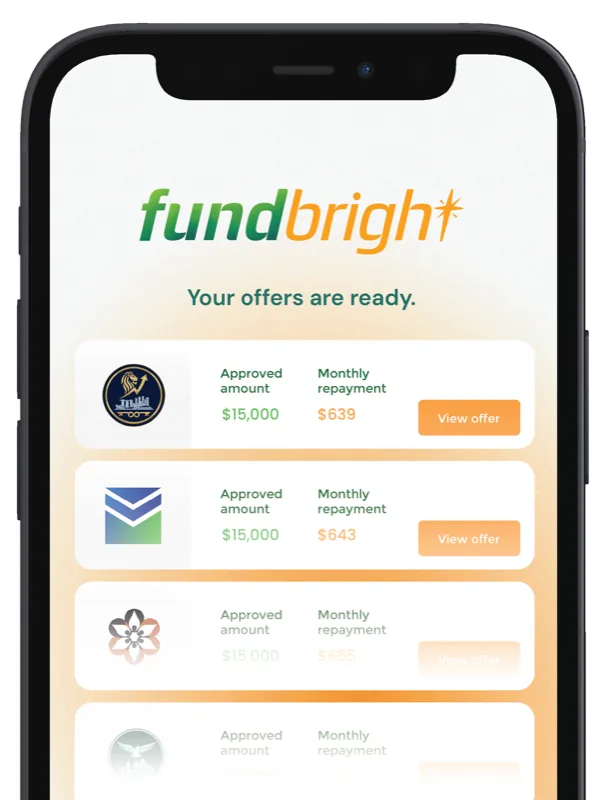
One of the most common mistakes first-time borrowers make is approaching a single bank or lender and accepting whatever offer comes back. Applying on FundBright takes minutes, and lets you compare multiple quotes before committing — saving you a meaningful amount over the life of the loan.
For licensed moneylenders, you can compare offers from several before committing — you’re under no obligation until you sign the contract. For banks, be mindful that each formal application triggers a hard inquiry on your CBS report, so do your research before submitting.
6. Red flags when reviewing an offer
Legitimate lenders — whether banks or licensed moneylenders — operate within defined legal limits. Watch out for:
- No EIR disclosed — required by law in Singapore
- Pressure to sign immediately — a genuine lender will give you time to read and understand the contract
- Fees that seem unusually high — for licensed moneylenders, interest is capped at 4% per month and an admin fee capped at 10% of the loan amount. Total fees cannot push your debt beyond double the original principal.
- Requests for your SingPass login information or ATM card — licensed lenders do not need these
- No physical office or licence number — all licensed moneylenders in Singapore must be listed on the Ministry of Law’s register. If they’re not on it, they’re not licensed.
If something feels off, it probably is. You can verify any licensed moneylender on the Ministry of Law’s registry, and report unlicensed lenders to the Registry of Moneylenders. FundBright only partners with MAS and Ministry of Law approved banks and licensed lenders.
Before signing anything, read what licensed lenders can and cannot do. It’s worth the five minutes.
Ready to find your best rate?
Get My OffersThese might also help


Ready when you are.Ready when you are.
checking will not affect your credit score