
Knowledge
The Licensed Lender on the MinLaw List: Licensed Moneylender (Singapore)
Licensed moneylender Singapore: who MinLaw licenses, the caps and checks before every loan, and how to check a lender on the official list.
A licensed moneylender in Singapore lends to you under a Ministry of Law licence, with interest, fees and checks set by the Moneylenders Act 2008 and the Registry's licence conditions. You confirm that a lender holds that licence by matching its name and approved address against the Registry of Moneylenders' public list before you borrow.
Who Counts as a Licensed Moneylender
A licensed moneylender is a business licensed by the Ministry of Law's Registry of Moneylenders to lend under capped interest and fees, with a mandatory credit check and an in-person identity check before every loan.
The Registry of Moneylenders sits within the Ministry of Law, and the Registrar of Moneylenders is appointed under s 4 of the Moneylenders Act 2008. Section 2 of the same Act places some lenders outside the licence altogether. These excluded moneylenders include a body set up or authorised by an Act to lend, a person regulated by MAS to the extent its own law permits lending, a registered credit society and certain pawnbrokers. A person lending solely to its employees, accredited investors or corporations is excluded too, and so is a business that lends in the course of a main business other than lending. Exempt moneylenders hold an exemption under s 91 or s 92, and the Registry publishes a separate list of them.
Table: who lends to consumers in Singapore, and where a licensed moneylender in Singapore sits among them.
| Lender | Licensed or regulated by | Lends to you? | Capped rates? | On the MinLaw list? |
|---|---|---|---|---|
| Licensed moneylender | Registry of Moneylenders, Ministry of Law | Yes | Yes, 4% p.m. interest and capped fees | Yes, on the list of licensed moneylenders |
| Bank | MAS | Yes | No Moneylenders Act cap; banks show the EIR in adverts | No, outside the moneylender licence |
| Excluded or exempt lender (for example a credit society, a pawnbroker or an employer lending to staff) | Its own law, or a Registry exemption under s 91 or s 92 | Only within its own scope | Set by its own rules | Exempt lenders sit on a separate Registry list |
| Comparison platform (FundBright) | Not a lender | No; the licensed lender you choose grants the loan | Not applicable | No; every lender it returns is licensed |
| Unlicensed lender | Nobody | Illegally | No cap applies in practice | No |
How is a licensed moneylender different from a bank?
The main difference between a licensed moneylender and a bank is the regulator, because the Registry of Moneylenders licenses moneylenders and the law caps their interest at 4% p.m., while MAS regulates banks, which carry no Moneylenders Act cap and read your Credit Bureau Singapore (CBS) record rather than the Moneylenders Credit Bureau (MLCB).
Why Licensed Lenders Are Not Loan Sharks
A licensed moneylender works inside caps and checks set by law; an unlicensed lender works outside the law altogether. A licensed moneylender carries a MinLaw licence and a name on the public list, with fees capped by law; an unlicensed lender appears on no list and answers to no cap. The risk sits with unlicensed lenders and impostors, and matching the lender's name and approved address to the MinLaw list tells them apart.
A loan shark is an unlicensed moneylender, outside the 153 licensed moneylenders on the Registry's list as at 1 November 2026. The Registry warns of scammers and unlicensed moneylenders masquerading as licensed moneylenders. FundBright's own experience is that licensed lenders are heavily regulated, in how they collect repayments as well as in the rates and fees they charge.
The caps a licensed lender must follow
Licensed lenders work under cost caps set by law, and the Registry of Moneylenders guide to borrowing from licensed moneylenders lists each one. Interest is capped at 4% p.m. for secured and unsecured loans alike, and late interest at 4% p.m. on the late amount only. A late fee stays at or below S$60 a month, and an admin fee (the Act's upfront fee) of up to 10% of the principal comes off the payout. Interest, late interest, the admin fee and late fees together stay at or below the principal, while court-ordered legal costs sit outside that total. These caps have applied since 1 October 2015.
The Moneylenders Act 2008 permits three fees on top of interest, namely the late fee, the admin fee and court-ordered legal costs, and any other fee is not recoverable, and charging one is an offence. Before you sign, check each line on your quote against the fees the Moneylenders Act permits.
Take a S$1,000 loan over 12 months at the 4% p.m. ceiling with the full 10% admin fee. You repay S$106.55 a month, which works out to an EIR of about 70% p.a. and an APR as shown on FundBright of 58% p.a.
The in-person identity check
Every licensed moneylender meets you in person at its approved place of business and checks your identity face to face before granting a loan. The Registry of Moneylenders sets out the rule on its list of licensed moneylenders in Singapore:
Licensed moneylenders "are required to meet the borrower in person at the approved place of business ... to conduct physical face-to-face verification of his identity before granting any loan". A loan "performed fully online, and at locations other than the approved places of business, is disallowed".
No licensed moneylender grants a loan fully online.
Signs you are dealing with an unlicensed lender
Spot an unlicensed lender by how it reaches you, where it meets you and what it asks for, using the warning signs that the Singapore Police Force advisory on unlicensed moneylending and the Registry of Moneylenders list between them.
-
Reject a lender missing from the list of licensed moneylenders.
-
Reject an offer that arrives by SMS, WhatsApp, a phone call or a social media post, channels the Registry bars licensed lenders from using to solicit loans.
-
Refuse a loan approved remotely, or one with no identity check at an approved place of business.
-
Refuse any request for money before the lender pays out the loan.
-
Refuse any request for your Singpass password or to keep your NRIC card, which the Registry bars even licensed lenders from doing.
Licensed lenders advertise only in business or consumer directories, on their own websites and inside or on the exterior of their approved premises, under the Registrar's Directions on Advertising and Marketing Activities. Do not reply to an unsolicited loan offer, and do not share your NRIC, Singpass or bank details. Check a suspicious offer with the ScamShield helpline at 1799, and report unlicensed moneylending to the Police hotline at 1800-255-0000 or through i-Witness. Carrying on or assisting unlicensed moneylending carries, for a first offence, a fine of S$30,000 to S$300,000, up to four years' jail and up to six strokes of the cane.
Where Licensed Moneylenders Fit in Singapore Lending
Licensed moneylenders sit between banks and unlicensed lenders, because the law regulates and caps them, yet they stay open to borrowers that banks turn away. The Moneylenders Act 2008 on Singapore Statutes Online draws the line between licensed, excluded and exempt lenders, and the Registry keeps its list of exempt moneylenders apart from the licensed list.
Table: a licensed moneylender in Singapore beside a bank and an unlicensed lender.
| Lender type | Regulator | Interest cap | Credit record read | Typical borrower | Verify at |
|---|---|---|---|---|---|
| Bank | MAS | None under the Moneylenders Act | CBS | Salaried borrowers who meet bank income minimums | MAS licensee pages |
| Licensed moneylender | Registry of Moneylenders, Ministry of Law | 4% p.m. | MLCB before every loan; some also ask for your CBS report | Borrowers banks decline, or who need funds the same day | The list of licensed moneylenders |
| Unlicensed lender | None | None | None | People reached by unsolicited messages | Appears on no list; report to the Police |
Is FundBright a licensed moneylender, or a comparison platform?
FundBright is a comparison platform. Every lender in the network is licensed: licensed moneylenders under the Moneylenders Act 2008, and banks such as CIMB. The final loan grant comes from the matched lender, issued in person at the lender's approved place of business. FundBright does not grant loans.
The Rules Every Licensed Lender Follows
Every licensed lender must check your MLCB record before granting a loan, stay within the interest and fee caps and respect your aggregate loan limit. These duties come from the Moneylenders Act 2008 and from the licence conditions the Registry of Moneylenders sets for licensed lenders.
The MLCB check before every loan
A licensed lender obtains your Moneylenders Credit Bureau (MLCB) report and submits your details to the bureau before granting a loan, under s 66 of the Moneylenders Act 2008, then updates your record as you repay, under s 68. The Second Reading speech on the Moneylenders (Amendment) Bill of 22 November 2023 describes the same two duties.
Each lender you approach directly runs its own MLCB check before granting a loan. Through FundBright, offers come back on one soft enquiry, an internal eligibility step that does not read your MLCB record, and the MLCB check then happens once, in person, at the lender you choose. The lender reads your record at that appointment, so check what your MLCB record shows before you go.
The aggregate loan limit across all licensed lenders
Your unsecured borrowing from all licensed moneylenders combined stays within 6x your monthly income once your annual income reaches S$20,000. Take a monthly income of S$3,500, which sets a combined cap of S$21,000 on what you owe every licensed moneylender together. Lower income bands carry fixed limits instead, and secured loans from licensed moneylenders carry no such limit.
What the loan contract has to show you
The Note of Contract states your monthly interest rate, your monthly late-interest rate and your repayment schedule, and the Registry's Form 1 Note of Contract carries no EIR field. The lender explains the terms in a language you understand and hands you a copy, and a request to sign a blank or incomplete contract is a warning sign.
For unsecured, non-business loans disbursed on and after 15 September 2026, you have three business days from disbursement to cancel under the Ministry of Law's mandatory cooling-off period for licensed-moneylender loans; the lender charges no interest and keeps at most S$50 (loans of S$5,000 or less) or 3.5% of principal (above S$5,000), never more than the admin fee paid.
Does a licensed moneylender approve a loan fully online?
No, a licensed moneylender does not approve a loan fully online, because it meets you at its approved place of business and checks your identity face to face before granting any loan. The Registry of Moneylenders licence conditions set this in-person meeting, and the Registry treats a loan done fully online as disallowed.
How to Check a Lender on the MinLaw Register
Check the lender's name, licence number and approved address against the Ministry of Law's list of licensed moneylenders before you sign anything.
-
Open the list of licensed moneylenders published by the Registry of Moneylenders from the Registry's site at rom.mlaw.gov.sg, and treat only web addresses on a .gov.sg domain as official.
-
Match the business name letter for letter, because licensed adverts carry the business name as stated in the licence under the Registrar's Directions on Advertising and Marketing Activities.
-
Match the licence number the lender gives you against the list.
-
Match the address, since licensed adverts state only the approved place of business.
-
Stop and walk away when any item is missing or differs.
What to look up
Look up three items on the list: the business name, the licence number and the approved address. The list's "as at" date tells you how current it is; it carried 153 licensed moneylenders as at 1 November 2026, and the count changes over time.
What to do if the lender is not on the list
A moneylender missing from the list of licensed moneylenders holds no moneylender licence, so do not borrow from it and do not reply to its messages. Check an unsolicited offer with the ScamShield helpline at 1799, and report unlicensed moneylending to the Police hotline at 1800-255-0000 or through i-Witness. Report a licensed lender that advertises outside the permitted channels to the Registry of Moneylenders on 1800 2255 529, as the Ministry of Law answer on licensed and unlicensed moneylender adverts advises.
What This Means When You Compare Offers
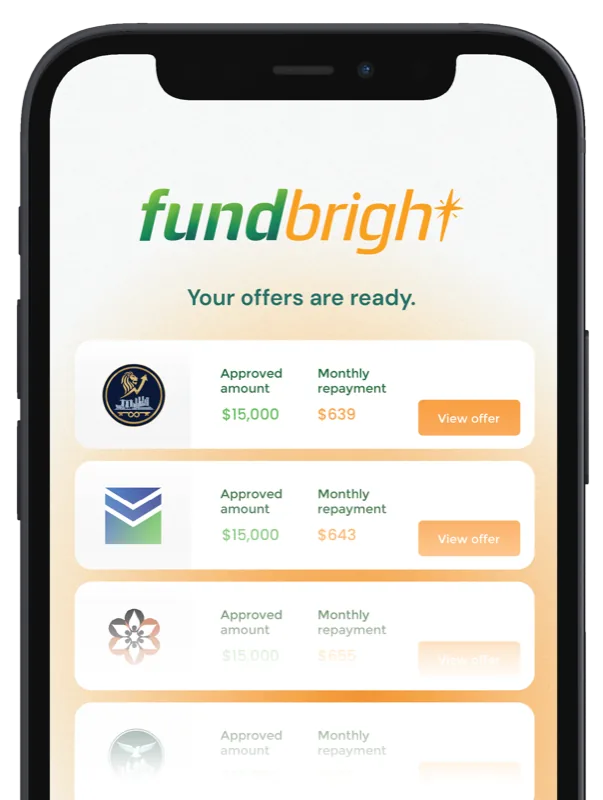
Comparing offers only from licensed lenders keeps every quote inside the legal caps. Checking the licence confirms the lender is genuine, and the next step is to compare licensed offers through Personal Loan Comparison (Singapore), which returns offers only from licensed lenders on one soft enquiry. FundBright compares the offers, and the licensed lender you choose grants the loan.
Best offer wins. No priority, no favourites. You stay in control.
Ready to find your best rate?
Compare Offers NowThese might also help
Ready when you are.Ready when you are.
checking will not affect your credit score